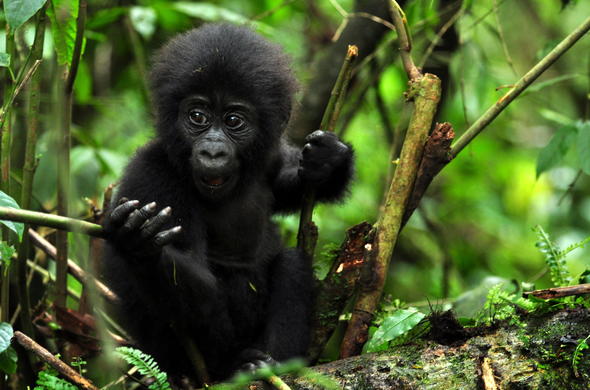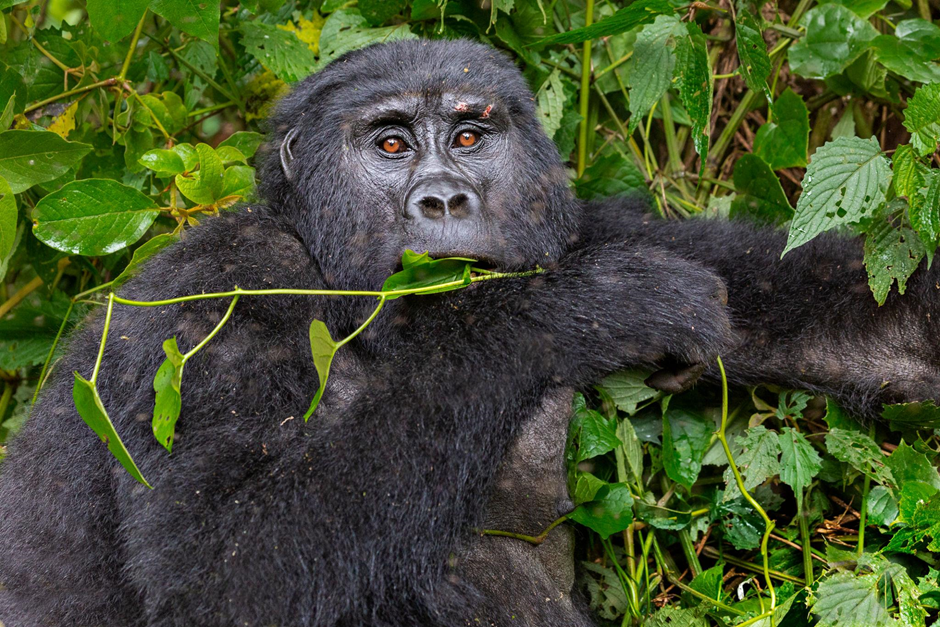
Mountain Gorilla Diet
Mountain Gorilla Diet- Mountain gorillas are among the most fascinating and powerful primates on Earth. Their close genetic relationship to humans and their endangered status often raise an important question among travelers and wildlife enthusiasts:
👉 What do mountain gorillas eat in the wild?

Mountain gorillas survive entirely on natural vegetation found in the forests of Uganda, Rwanda, and the Democratic Republic of Congo, including:
- Bwindi Impenetrable National Park (Uganda)
- Mgahinga Gorilla National Park (Uganda)
- Volcanoes National Park (Rwanda)
- Virunga National Park (DRC)
Unlike zoo animals, mountain gorillas rely completely on forest ecosystems for survival, making their diet highly specialized and fascinating.
🟢 Featured Snippet Answer: What Do Mountain Gorillas Eat?
Mountain gorillas are primarily herbivores that eat leaves, stems, shoots, fruits, bark, and roots. Around 86% of their diet consists of leaves, shoots, and stems, while the rest includes fruits, flowers, roots, and small insects such as ants and termites.
🌿 What Do Mountain Gorillas Eat in the Wild?
Mountain gorillas are herbivores, meaning their diet is made almost entirely of plant-based food.
🟢 Main Foods in a Gorilla Diet
Mountain gorillas consume more than 140 plant species, including:
- Leaves
- Shoots
- Stems
- Wild fruits
- Bamboo shoots
- Tree bark
- Roots
- Flowers
- Vines and herbs
📊 Diet Breakdown (Approximate)
- Leaves, stems, shoots: 86%
- Roots: 7%
- Fruits: 2–3%
- Flowers: 3%
- Insects (ants, termites, snails): 2%
🍃 Why Mountain Gorillas Mostly Eat Leaves and Plants
Mountain gorillas live at high altitudes where fruit trees are less common. As a result:
- Their diet is mostly leafy vegetation
- They eat low-energy, high-fiber foods
- They consume large quantities daily
Unlike lowland gorillas, mountain gorillas have limited access to fruit-rich diets.
💪 How Much Do Mountain Gorillas Eat per Day?
A mountain gorilla consumes a surprisingly large amount of food daily due to its body size.
🟢 Daily food intake:
- Adult male (silverback): 20–30 kg of vegetation per day
- Adult female: 15–20 kg per day
Gorillas spend most of their day:
- Feeding
- Searching for food
- Resting between meals
🧠 Do Mountain Gorillas Drink Water?
Mountain gorillas rarely drink water directly.
Instead, they get hydration from:
- Leaves and stems (which contain moisture)
- Morning mist and dew in the forest
This allows them to survive without needing rivers or water sources daily.
🐜 Do Mountain Gorillas Eat Meat?
Mountain gorillas are not true carnivores. However, they are technically omnivores because they occasionally consume:
- Ants
- Termites
- Caterpillars
- Snails
- Grubs
These make up a very small portion of their diet (about 2%).
🍌 Do Mountain Gorillas Eat Bananas in the Wild?
Mountain gorillas do NOT eat bananas in the wild because:
- Bananas do not grow naturally in their forest habitats
- Their environment is too dense and wild for cultivated crops
Even though they can eat bananas in captivity, wild gorillas almost never encounter them.
🌳 How Mountain Gorillas Collect Food
Mountain gorillas are selective feeders, meaning they do not destroy entire plants.
🟢 Feeding behavior:
- Eat leaves from one plant
- Move to another plant for stems
- Later feed on roots or bark elsewhere
- Rotate feeding areas to allow regrowth
This behavior helps:
- Preserve forest ecosystems
- Maintain food sustainability
- Support biodiversity
🚶 How Far Do Mountain Gorillas Travel for Food?
Mountain gorillas move around 3–6 km per day searching for food.
They:
- Wake early in the morning
- Travel as a family group
- Led by a dominant silverback
- Build new nests every night
🦍 Social Behavior Linked to Feeding
Mountain gorillas communicate using over 25 vocal sounds, including:
- Grunts
- Roars
- Screams
- Hoots
- Chest beats
The silverback ensures:
- Group safety
- Access to feeding areas
- Protection from rival groups
👶 Gorilla Diet and Baby Development
Gorilla reproduction is slow, which affects population growth.
🟢 Key facts:
- Gestation period: ~8.5 months
- Birth rate: 1 baby every 2–3 years
- Babies weigh: 3–4 kg at birth
- Depend on mother’s milk for months
Young gorillas gradually transition from milk to vegetation over time.
🌿 Why Gorilla Diet Helps the Ecosystem
Mountain gorillas play a vital ecological role:
🟢 Benefits:
- Spread seeds through forest
- Encourage plant regrowth
- Maintain forest balance
- Support biodiversity
Their selective feeding ensures forests remain healthy and sustainable.
Ready to Explore East Africa?
Tata Africa Safaris is waiting to work with you in planning your Uganda, Rwanda, Kenya or Tanzania holiday for 2026–2027 onwards.
Plan Your Safari